Showing posts with label music. Show all posts

Saturday, May 14, 2016

Prince at Bennett's Lane


On April 21, 2016, the musician known as Prince passed away. The exact cause and circumstances of his death are unknown at time of writing, although it has been widely reported that he was addicted to prescription painkillers, and that these may have played a part.

Prince toured Australia five times, and had been as popular and successful here as everywhere else. The outpouring of grief at his passing was public, and prolonged.

But rather than focus on his sad, premature demise, today we will revisit Prince's role in a famous piece of local music folklore. The occasions (yes, more than one), when the multi-millionaire, multi-platinum selling, pop megastar played secret shows at humble Bennett's Lane nightclub.

Flyer from Prince's first Australian tour; Sydney, 1992.
Prince first toured Australia in 1992, as part of the 'Diamonds and Pearls' world tour, which kicked off in Japan, and then ventured to a handful of European cities. The clamour to see Prince live locally was enormous; he had been one of the worlds most popular musicians since his album '1999' had been released in 1982, and a visit to Australia seemed long overdue

Backed by his new band, The New Power Generation, the tour focused mainly on tracks from the 'Diamonds and Pearls' album, including the eponymous title track, and hit single 'Cream'. An extraordinary six shows were sold out quickly at the Sydney Entertainment Centre, and five at Melbourne's Tennis Centre.


On stage in Australia, 1992.
The tour was a massive success, but it would be 11 years before Prince would return.

Souvenir tour book, 2003 Australian tour.
In 2003 the artist, though still popular, was no longer the chart topping phenomenon of a decade before. Displaced from the apex of the pop tree by a younger generation of stars, Prince responded with a shorter tour (2 arena shows in Melbourne and Sydney, and some smaller gigs) and a set list that played like a greatest hits collection.

The two shows in Melbourne were set for 21 and 22 October, at Rod Laver Arena.

Bennett's Lane Jazz Club.
Before the first of these Prince, who was known to enjoy playing secret shows in small venues from time to time, decided to find a local bandroom where he could play a warm up gig. He settled on Bennett's Lane, a well established local club just off Lonsdale Street, best known as a jazz venue. Exactly why he chose the venue is not known, although the club had attracted at least one big name before; Harry Connick junior had played warm up shows at the club several times on his own tours.

Not knowing anyone at the venue, Prince simply showed up late Sunday night and explained what he wanted:

While the show was never formally announced, and was only arranged the night before it happened, word still got out. By 8.30pm on Monday evening, 100 people were queuing outside Bennett's Lane, hoping to see the show or, at least, catch a glimpse of the star.

In the end, about 200 people paid $20 each to cram into the small club and watch Prince and his eight piece touring band:


It was a lengthy set, featuring classic tracks like 'Kiss' and 'When Doves Cry', that didn't finish until deep in to the small hours. Prince's subsequent arena shows were sold out, and the performances were well received.

Prince onstage at Rod Laver arena, 2012.
Another decade on, and Prince was back in town on the 'Welcome 2 Australia' tour, again playing two shows at Rod Laver arena. After the first of these, on May 14 2012, Prince again made his way to Bennett's Lane, this time looking for a place to wind down and relax after the high energy performance of his earlier set.

Second time round, the secret show didn't even start until 2am, with the club announcing the news on their Twitter feed:


You can also note the increase in ticket price compared to 2003, although the venue announced the following day that all of the profits had been donated to charity. 

The lateness of the hour also provided a different atmosphere to the previous surprise gig; a smaller, more relaxed crowd, with Prince and his band focusing on funk tracks, and free form jamming. Prince himself played the piano, and the drums, as well as singing.

Both secret gigs have attained legendary status, in the rich musical history of our city.

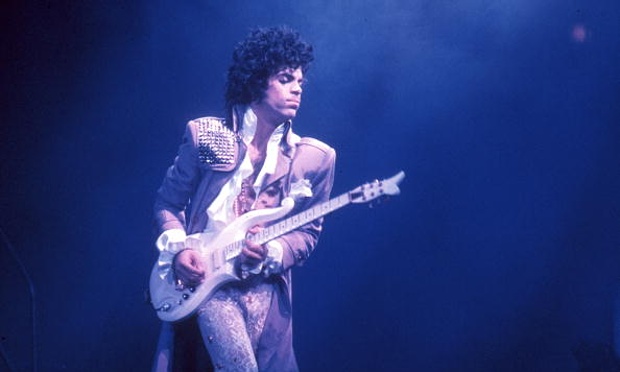
Prince on stage in 2016.
Prince returned one final time to Australia, bringing his 'Piano and Microphone' tour here in February this year. 

Now the raucous, high tempo pop and funk of his earlier hits had given way to a more intimate style, as Prince played  for the first time without a backing band. His choice of venues reflected the change in approach; instead of arenas he played the more elegant State Theatres in Melbourne and Sydney.

The tour was not without its bad reviews and difficult moments. Punters in Melbourne complained of a short set length (about 80 minutes) in light of sky high ticket prices. And the artist was obviously effected by the death of a former girlfriend, singer Denise Matthews, that was announced shortly before his first Melbourne show.

But his new approach and material was mostly well received, a fitting send off for an artist who had re-invented himself a number of times. Final word can, perhaps, go to Meg Evans, eyewitness at both of Melbourne's secret shows, and someone who saw Prince at close and intimate range:


Friday, July 24, 2015

Evan Dando at The Hi Fi


The Lemonheads in 1987.

The Lemonheads were formed by a group of high school friends in Boston in 1986.

They came to prominence in the early 90s; their jangling guitars and bittersweet, melodic pop songs finding a place among the alt-rock music that dominated the era. Their 1992 album, It's a Shame About Ray, was a critical and commercial success, and one of the defining records of the era.


Evan Dando, 1992. Note the 'Smudge' tshirt.

Lemonheads frontman Evan Dando seemed like the quintessential 90s rockstar; sensitive, laconic, scruffy, and largely unchanged by success. Dando was the one constant in the band as it developed, with other musicians coming and going regularly. He also had a documented drug problem, and his behaviour was erratic at times.

But his sweet voice and facility with wistful lyrics always shone through, whatever turbulence had occurred in the background.


By the time the 90s became the 2000s, The Lemonheads were defunct (splitting in 1997)  and Dando was performing as a solo artist.

But his recorded output since the band had ended consisted of only one live album, 2001's Live at the Brattle Theatre, which served to showcase an artist resting on former glory; his set list made up of old Lemonheads songs and covers. In the intervening years, Dando's drug and alcohol problems had worsened and the artists behaviour had become increasingly eccentric and unpredictable. He sometimes appeared disorientated in interviews, and struggled to finish his sets when onstage.

Then, things seemed to take a turn for the better.

In 2003, Dando finally recorded his first solo album of new material, Baby I'm Bored. This was accompanied by a much publicised detox and a change to a healthier lifestyle. The new, improved Dando would support his album with a world tour, a showcase for his reinvigorated talent, body and mind.


Evan Dando and Nic Dalton

Evan Dando had a long history with Australia. 

In the early 90's, before he made it big, he had travelled around the country, and had fallen in with a couple of like minded local musicians, Tom Morgan and Nic Dalton. Morgan and Dalton, best known locally as part of the band 'Smudge', had helped write the songs that became It's a Shame About Ray. Dalton would subsequently join the Lemonheads and serve as one of their many guitarists, playing and touring for two and a half years to 1996.

Once he left the band, Dalton then moved from playing to production, founding the successful local indy label Half-a-Cow records.

So when Dando needed musicians for a backing band for his solo tour, he turned to his old friend and colleague Dalton, asking him to play base. Dalton agreed, and he became part of what appeared, on paper, to be something of an alt-rock supergroup; alongside Dando and Dalton were former Dinosaur jr drummer George Berz, and You Am I guitarist Davey Lane.

Two shows were set for Melbourne, in the first week of August, 2003.


But it soon became apparent that Dando's new, cleaner lifestyle had not entirely taken hold.

Dando at The Prince, August 2003.

Sporting a beard, a trenchcoat and heavy, lidded eyes, Dando's first show at The Prince was something of a mess. The singer, clearly not entirely with it, began his set by mocking the venue:

'This place used to rule! Now it sucks. God bless gentrification, right?'

Things went downhill from there.


Standing on the corner of the stage, Dalton plucked at his base, looking unimpressed. He would leave the band immediately after the show, his participation in the tour over.

Although whether he was fired, as originally announced, or left due to Dando's behaviour, has never been established (a website with Dalton's name attached currently indicates that he left the band because he was unwell).

Whatever the explanation, with a gig the following night Dando was now without a base player. Whether due to bravado, or his lackadaisical nature, the singer simply decided to soldier on without one.

August 2, 2003 then. Evan Dando at The Hi Fi Bar.

One of the most notorious gigs in the city's long musical history.

The mystery girl, onstage with Evan Dando at the Hi Fi.

The night started unremarkably enough; the set opening with Dando onstage, by himself, singing a Lemonheads number, The Outdoor Type.

Things became strange as his band joined him for the set proper. Accompanying the rest of the group onstage was an unknown young girl, who joined Dando at the microphone.


As a remarkable coda to the story, the embarrassed young girl on stage, holding up the words to songs that Dando had forgotten, was later found to be Missy Higgins. Higgins, a Lemonheads fan but then totally unknown, had talked her way into the sound check in the hope of catching a glimpse of Dando. She and Dando had begun talking, and he had impulsively insisted that she join the band on the stage.

Despite the chaos of the Melbourne shows, the group was able to salvage something from the rest of the tour. Dando had cleaned himself up somewhat by the time they played two shows in Sydney, and the musicians had more time to rehearse, making for a tighter live set.

Subsequent to the tour, Dando has continued to follow his own path.

He has detoxed and cleaned up a number of times, and has relapsed an equal number. He still tours Australia regularly, with the gigs running the full spectrum from the sublime to the ridiculous.

But nothing has topped his efforts at the Hi Fi Bar, in 2003.

Recalling his infamous effort during an interview in 2006, Dando seemed characteristically non-plussed:


As fitting a summation as any.

Saturday, August 23, 2014

I Wanna Be Loved


In 1984, rock-pop musician Elvis Costello was close to the peak of his popularity.

His previous record, Punch the Clock, had been a critical and commercial success; it featured one of his biggest singles, Everyday I Write the Book, alongside edgier moments, like his denunciation of Thatcherism, Pills and Soap. Costello was hip, credible and popular.


But, behind the scenes, all was not as well as it appeared.

His marriage to wife Mary Burgoyne, who he had known since his teens, was faltering. And tension between Costello and his backing band, The Attractions, had been building for some time. In particular, the relationship between the singer and his bass player, Bruce Thomas, was on the slide, an issue exacerbated by the band's frustrations with the previous album.

While Punch the Clock had been a hit, Thomas felt the group had drifted too far from their roots. The clean production and accessible tunes were a long way from the raw, new wave style of the band's earlier albums.

Attractions bassist Bruce Thomas

With these different tensions in the background, the group gathered at Sarm West Studios in London to record a new record, ominously titled Goodbye Cruel World. The sessions did not go well; tensions between the band members were quick to surface, exacerbated by further differences with producer Clive Langer (who urged the band to continue with their recent, more polished approach).


Guest musicians were brought in, substitute producers hired for individual tracks, and Costello subsequently called the recording 'tense and unproductive,' and the resulting record 'our worst album.' Reflective of the behind the scenes disagreements, the content of Goodbye Cruel World was a hodge podge of many different musical styles and approaches.

One of the tracks from the new record was a cover of an obscure 1950's song called I Wanna be Loved, originally recorded by Teacher's Edition. This slow tempo, moody love song was one of the cuts on Goodbye... to get a big, commercial production and so was chosen by the record label as one of the album's singles. To support the release of the song, the label also sprung for a music video.

To create this, Costello would make a left field choice. Possibly still trying to balance commercial and artistic considerations, he selected a largely unknown, avante garde crew of Melbourne film makers, who had come to his attention after he had seen some film they had shot of The Birthday Party (then just a fringe group themselves).

Evan English

Evan English was a maverick, iconoclastic visual artist in the finest film school tradition. Studying film at Swinburne University in Melbourne in the late 70's, English - in conjunction with his classmates Paul Goldman, John Hillcoat and Chris Kennedy - established a reputation for heavy drinking and wild behaviour. Together, they were dubbed 'The Gang of Four'.

Their group's antics were at least as well known as their unusual, experimental films. In one instance they dumped frozen chickens into a lecturer's swimming pool, in another they set a school office on fire. A classmate recalled, 'They were intelligent but dumb, optimistic but nihilistic, stressed out and driven by a creative urge.' They were, effectively, film making punks and their involvement in the local punk music scene would lead them to the collaboration with Nick Cave and The Birthday Party, that brought them to Costello's attention.

Forming an ad hoc production company, The Rich Kids, English turned his attention to directing Costello's music video clip.

And true to his reputation, English proved difficult and demanding to work with. He insisted that the clip be shot in Melbourne, and so forced Costello to fly half way round the world right as his marriage was falling apart. Recalling this time much later, Costello remembered sitting in his hotel room on his own, depressed and uncertain.

For the clip itself, English had a simple, if unusual conceit.

Costello would sit in a photo booth at Flinders Street train station, with the camera positioned directly in front of him. As he sang, different people would join Costello in the booth, interract with him, have their photo taken and depart. To give it some edge, the director did not disclose to the singer who would join him in the booth, or what they would do.


The emotion of the shoot is apparent, as Costello looks slightly dazed at times in the clip, and mutters half of his lines.

But the video is a clever, surreal, highly original piece of work, and provides terrific accompaniment to the song. Costello was certainly pleased with the outcome, describing it as 'probably my favourite' from among the band's music videos. The clip rounds off with a nice shot of the station's well known entry hall, as Costello collects his photos and walks away.


(Viewing on an iPhone? Click here).

The song proved a hit as well, making the top ten in the UK (the last Attractions song to achieve this for a decade).

While The Rich Kids didn't last, Evan English continued to work in the local film and music industries, most notably with his old schoolmate John Hillcoat (English wrote and co-produced Hillcoat's remarkable prison movie Ghosts of the Civil Dead in 1988). But his fan favourite music video clip remains an enduring achievement, and a neat time capsule of Melbourne in the 80's.


Wednesday, January 29, 2014

The Great Calder Park Rock 'n' Roll Swindle


February 1, 1993:  A massive crowd of rock fans descend on Calder Park Raceway to see one of the world's biggest bands, Guns 'n' Roses. Touring their hugely successful Use Your Illusion double-double album, the Californian rockers would play a two hour set that was wildly received by the assembled throng.

But a day of big bandannas and big riffs would end in chaos, with thousands of hungry, thirsty, sun stricken punters straggling home along the freeway on foot in the middle of the night. The Gunner's Calder Park gig would become one of Australia's most notorious music fiascoes, and the ensuing public investigation would force long term changes to the regulation of the live music industry in Victoria.


Thirty kilometres north west of Melbourne, flyspeck Calder Park began hosting motor sport on a dirt track in the early 1960's. As the sport increased in popularity a basic asphalt circuit was laid, the first meeting held there in January 1962.

One of the early competitors was Bob Jane, a professional race driver who later would make his name with a chain of successful tyre repair shops. In the 1970's, Jane bought the property the racetrack was built on and, after a trip to watch NASCAR racing in the US, greatly expanded and improved the facilities.

By the early 1980's, Calder Park Raceway (sometimes referred to as the Melbourne International Raceway) was one of Australia's largest motorsport venues.


Bob Jane at Calder Park during track construction work.

By 1993, Guns 'n' Roses had reached the very pinnacle of the music business. As a follow up to their classic hard rock album from 1989, Appetite for Destruction, they had released not one, but two double albums in 1991, Use Your Illusion I and II, and then watched them both go multi-platinum.

Taking these albums on the road was a gargantuan task. Their world tour would last more than two years and encompass 194 shows in 31 countries, making it one of the biggest and longest tours in live music history. The band's popularity was such that they frequently played outsized venues, including a number of racetracks, among gigs at more traditional locations.


Height of fame: Gunners on the cover of Rolling Stone, 1993.

The Gunners stop in Australia would only be brief; two shows in a week before heading off to New Zealand. On January 30 they played the Eastern Creek racetrack outside of Sydney, a gig that was hugely successful with both fans and critics alike (a 2011 poll by a local radio station voted this the best rock show ever staged in Australia). 80 000 people attended and enjoyed the day without major incident.


Ticket stub from the Gunners Eastern Creek show.

The stage seemed to be set for an epic event in Melbourne a few days later.

But even before the day of the show, trouble was brewing. Dedicated fans began arriving at the racetrack the night before, the evening of January 31, camping out to nab the best vantage points for the next day. They bought tents, sleeping bags and, crucially, their own food and drink.

Also arriving the night before were the merch vendors. And seeing that they already had a captive audience, the most industrious of these began working the lines, selling t-shirts and other souvenirs. And not selling them cheap either; the official tour t-shirt was touted for as much as $75. The hard sell along the queue continued into the next day.


G 'n' R merch played a crucial role in the fiasco.

February 1 was a sweltering summer’s day, the temperature reaching into the high thirties. As 75 000 ticket holders drove or caught special bus services out to the track, they had little idea what was in store for them.

What the majority of fans hadn't realised, as they made their way to the gig, was that the organisers had stipulated a list of items that could not be brought into the show. These included standard items like alcohol, but also; food, drink, eskies, umbrellas, cameras and sunscreen. Burly security teams manned the entrance and ordered patrons to hand over their provisions. Even bottles of water were confiscated. People were directed to replenish their supplies from outlets inside the racetrack.


75 000 hot, thirsty, frustrated fans crammed the raceway.

But having queued for as long as five hours to get into the place, these hapless suckers then faced queues averaging an hour and a half to get a sandwich or a beer. And sky high prices - as much as $5 for a small bottle of water, as an example – when they did get served.

The early arrivers, who had brought their own food and then spent their dollars on t-shirts and CD’s while waiting to get in, suddenly found themselves trapped; a long way from Melbourne with nothing to eat or drink and now no money to buy anything else. Thirsty people who tried to scrounge water from the bathroom facilities had their drink bottles taken from them by zealous security guards. Arguments and scuffles broke out.

The bathroom facilities themselves quickly descended into unhygenic chaos. The queues were so long that makeshift toilets were erected, these consisting of nothing more than a cloth screen erected around a patch of open ground, where desperate people could take their chances. The ladies version of this was later described as a 'urine saturated swamp' in an official complaint written by one survivor, undoubtedly still scarred to this day.

But perhaps most seriously, the organisers had taken no precautions regarding the hot weather. Calder Park Raceway is on an arid, treeless plain and no shading had been set up to provide any respite from the sun. Having had their sunscreen confiscated, punters were directed to a single sunscreen booth and another long queue to get a squirt out of a communal drum.

The combination of the hot weather, lack of shade and restricted access to water had dire consequences. Nearly two thousand people were treated for sunstroke and a number ended up in hospital.


Rare photo of stoic G 'n' R fans, February 1, 1993.

For everyone that survived the sun, in the mid afternoon Melbourne's fickle weather did one of its famous U-turns. A sudden wind blew up, followed by thunder, lightning and a torrential downpour. Within minutes, the crowd was drenched, thousands of thirsty people opening their mouths to catch the only free water they were going to get that day.

And then... G 'n' R came on.


G 'n' R frontman Axl Rose, Use Your Illusion tour.

For two hours all the problems of the day were forgotten in a riot of pumped up guitar rock. Mixing classics off their earlier albums with newer songs and popular covers, the band delivered what their fans had come for; a noisy, jumbo sized, excessive spectacle.


But once the band finished and the buzz started to subside the assembled crowds were faced, once again, with the ineptitude of the gig's organisation.

The thousands who had driven to the raceway found the rain had transformed the dirt carpark into a boggy mudheap, compounded by the absence of any lighting or staff to help people find their cars or the one road out. Massive queues of vehicles soon devolved further into an impossibly tangled traffic jam.

People relying on other means of transport were no better off. There are no public transport services to Calder Park, so a charter bus service had been arranged to ferry people to and from the venue and the city during the day. Helpfully, the last batch of these left shortly after the end of the concert, leaving thousands of people stranded. Some of them tried to hitch a lift with any of the cars that had managed to escape the carpark, but thousands more simply took to the Calder Highway on foot.


In the aftermath of the days events, the Victorian Ombudsman would receive enough complaints to warrant a formal, public investigation. Several of its recommendations laid the groundwork for new rules that still govern live music in the state today, including the requirement for concert organisers to provide free drinking water and adequate shelter.

But these things are very much a matter of perspective. Searching online, you can find many concert goers who focus mainly on the memories they have of the music, an less on the day's problems.

And reflecting on the gig in an interview in 2012, then G 'n' R drummer Duff McKagan recalled 'a fucking sea of people'... and nothing else.

While the official Gunners website has this entry in the bands very detailed history:


The Guns 'n' Roses concert was the last one ever held at Calder Park.
Tuesday, February 12, 2013

The First 'Dirty Three' Gigs


The Dirty Three are a Melbourne music institution. Their vibrant, raucous, free form compositions are as visceral as they are hard to categorise. To see them live is to witness something special.


But like many well known artists, their performing roots are humble.

The members of the band - Warren Ellis, Mick Turner and Jim White - were all veterans of the local Melbourne music scene and were well known to each other. Prior to the the Dirty Three's formation, Ellis and White had been in a band together, Busload of Faith, and Turner and White had played together previously in several local groups.

In an interview recorded in 1994, Turner recounts what happened next:


The line up would be Ellis on violin (he had once had classical training), Turner on bass and lead guitar and White on drums. The new band played their first gig in front of a handful of punters at the Baker's Arms Hotel on Anzac Day, 1992:


The music was experimental and wild. Ellis attached a guitar pick up to his violin with a rubber band, giving it a unique, high pitched squawk. The music was, and has largely remained, entirely instrumental, with mumblings or anecdotes between tracks the only vocals. Each track took the form of an extended jam with a loose structure, and was much longer than the usual rock or punk song. From the same interview noted above, Ellis explains:


The proprietor was obviously happy with what the band had produced, as the first gig lead to a Friday night residency that lasted several months:


Currently, I live in Abbotsford, only about fifty metres from the Bakers Arms Hotel. Sadly, live music is no longer performed there, replaced by a mass of pokie machines, and it's the sort of joint where you can buy a six pack over the counter at 8am if you feel so inclined. It's as hard to imagine The Dirty Three playing there now, as it is to imagine the same band playing in front of a small crowd for free.


But while the pub may have seen better days, The Dirty Three quickly found success.

Their first recordings, a tape of a rehearsal at Turner's house, were given away (!) at gigs the following year and generated considerable excitement. And their live shows, spreading out from The Bakers Arms to more prestigious venues around Melbourne, became word of mouth successes due to their unpredictable energy.


The Dirty Three play the Evelyn, January 1993. Note Mick Turner's art
in the gig poster, which would become a feature of their album covers.

In 1994, the still fledgling band gained prominent support slots for Australian tours by American bands Pavement and The Beastie Boys. National and international success would soon follow.