Tuesday, September 8, 2015

How The Yarra Changed Its Course


The Yarra has always been the gateway to Melbourne.

Before the arrival of European settlers, our coastline was a windswept, swampy place, a haven for birds but little else. Westerners arriving by ship had no hesitation in bypassing this unpromising area and heading upriver.

These early colonials found their progress halted by a small waterfall (roughly where Elizabeth Street is today), adjacent to a lush valley between two small hills. The Yarra had delivered them to what they were looking for; a good place to found a village.

A map of the Yarra from 1864, much as the first Europeans found it.

The rivermouth today; note the change in course.
But while the Yarra linked the new settlement to the sea, it came with its own set of problems.

It was a shallow river, and prone to flood. And its final stretch was narrow, and winding, and difficult for large ships to navigate. Once the city began to flourish - on the back of the gold rush, followed by an agricultural boom - the local authorities turned their attention to solving these problems.

Enter John Coode.

John Coode.

Born in Cornwall in 1816, John Coode studied civil engineering at Plymouth University, before starting a career in the public service. Specialising in harbour design, Coode established his reputation in the Colonial service, with major overhauls of the ports at Colombo (Sri Lanka) and Table Bay (South Africa).

Diligent and hard working, and undaunted by large projects, he was considered to be one of the foremost engineers of his day.

Digging 'Coode's Channel', 1880.
In 1878, the Melbourne Harbour Trust retained Coode to review Melbourne's port facilities, and their integration with the Yarra. Thorough as ever, Coode spent a year researching a voluminous report that contained a raft of recommendations.

Chief among them; that the Yarra should be dredged, and widened, and its erratic path to the sea straightened by construction of an artificial channel, cutting off the corner at Fisherman's Bend. This would redirect the river's watercourse significantly; instead of heading north from Hobson's Bay, and then meandering south-east, it would now curve directly east and head straight for the city. The benefits of the proposal were obvious: the deeper, wider river would be easier to navigate, and the more direct route would save shipping time.

In 1880 the state Government accepted Coode's proposals, along with another recommendation to build a new wharf at the west end of the city (what would become Victoria Harbour). An army of unemployed labourers, supplied by the economic downturn of the 1880s, was assembled and set to work.

Fisherman's Bend, shortly after the canal's opening.
This mammoth project, one of Melbourne largest, would take six years to complete.

But, finally, in 1886 the walls holding the river back were removed, and the newly dug channel was flooded. Officially known as 'Coode's Canal', all of the promised benefits were shortly realised and the project hailed as a great success.

There was also an unintended consequence.

While the bulk of the Yarra followed its new, artificial channel, a small volume of water continued to flow down the original course. This effectively created a new island, shortly dubbed 'Coodes' Island' after its unwitting creator.


A basic graphic showing new and old Yarra, and Coode Island.

A vacant Coode Island is visible at the top of this image.
An empty plot of land close to, but separate from, the city, Coode Island enjoyed a short, colourful history.

After its creation, it sat vacant for two decades, before being put to use as a quarantine station for animals arriving from overseas. By 1915 it was in use as a sanitorium, providing care for people suffering from contagious diseases, plague and tuberculosis among them.

It also served as home for at least some of Melbourne's itinerant population, as homeless people erected huts and shanties on disused parts of the island.

A test aircraft outside the Larkin hanger on Coode island
In 1927 the Larkin Aircraft Company took over the lease, and erected a large complex that included a factory and an airstrip. Plane design and test flights were conducted from there from the 1920s through to World War II.

After the war, Larkins closed their local operations and the island was taken over by several petrochemical companies. Major industrial plant was constructed, and hazardous materials produced and stored.

By this time, the old Yarra had disappeared for good. The flow of water down the original riverbed had slowly diminished over the years, and much of the river had either evaporated, or been filled in. By the 1960s it was gone altogether.

The former island is now another industrial park on the northern riverbank, one of many operated by the Port Authority.


The name Coode Island still appears on some maps though, including Google Maps, and so serves as a final reminder of the time the the Yarra changed its course.


Wednesday, August 26, 2015

Suburbs That Changed Their Names

In some ways, Melbourne is a chameleon city.

Consider the following; it has had a number of names (starting with 'Bearbrass'), has evolved through a number of distinct eras (illegal farming outpost, sub colony of Sydney, gold rush boom town, 'Marvelous Melbourne' in the 1880s), and has had its geography almost totally altered (Batman's Hill, the South Melbourne Swamp and the Elizabeth St Waterfall were all prominent features, now consigned to history).

Even the street names that break our city into its famous grid are enigmatic; start on Elgin Street in Carlton and head east and you will shortly find yourself on Johnson Street, then Studley Park Road, without taking any corners.

Another way that our city reveals its shifting nature is in the names the suburbs. Many of these have changed over the years, and some more than once. The following list is a selection of these (Know another? Drop me a line...).


BALLYSHANASSY

Current Name: Burwood

Like so many people in the story of Melbourne, John O'Shanassy stopped here on his way to Sydney, where he was headed to make his fortune, and never left. The story goes that the devout Irishman had a chance meeting with Melbourne's first Catholic Priest, Rev. Patrick Geoghan, who convinced him to stay on.

Which worked out well for O'Shanassy, who started a profitable drapery business on Collins Street and then moved into politics. Twice Victoria's Premier, O'Shanassy's second term in office in 1858 coincided with the development of this suburb in Victoria's east, whose name is thought to be a tribute. 

But subsequent arrivals from England chafed at living in an area with an Irish name (similar to 'Irishtown', below). A campaign was eventually organised to change the suburb's name, and the local council opted for 'Burwood', taking the name of prominant local settler Sir James Palmer's estate. Burwood was formally applied to the suburb in 1879.


EMERALD HILL

View of Melbourne from the base of Emerald Hill, 1858.
Current Name: South Melbourne
Immediately behind the south bank of the Yarra, the first European settlers of Melbourne were struck with a remarkable sight. Rising from the broken, swampy ground that stretched towards the coast was a lush green hill; a volcanic outcrop, covered in thick foliage. 

While the damp land around the river's edge was mostly unsuitable for settlement, the hill itself was considered a prime location. The site was surveyed and subdivided in 1852. and so became one of Melbourne's first suburbs. The name Emerald Hill was a riff on a description by a local journalist, Edmund Finn, who in 1845 described the area in the 'Port Phillip Herald':

Green as the freshest shamrock, encircled by shining lagoons and the shining sea.

The name Emerald Hill was used in the promotional material when the land was sold. As the area boomed in the 1870s, the local council adopted the name 'South Melbourne', feeling that this was more befitting their growing stature.


HOTHAM


Current Name: North Melbourne

Born in Suffolk in 1806 to a seafaring family, Charles Hotham joined the Navy when he was only 12, serving as a cabin boy in the Caribbean. A decorated, globe trotting career followed; Hotham rose rapidly through the ranks and commanded ships in South America, and a fleet in Africa. But this stern, authoritarian man was not universally popular.

Hotham's political enemies had him removed from the armed service, and posted to out of the way Victoria as Lieutenant Governor in 1853 (expanded to full Governor the following year). Initially a popular figure in Melbourne, Hotham's aggressive response to the Eureka Stockade lead to a collapse in his support. He tendered his resignation in early 1855 and was waiting to be replaced when he died in office, on December 17.

To commemorate Victoria's first full Governor, a new suburb north of the city was named after Hotham in 1859. The area flourished and quickly became one of Melbourne's most distinguished suburbs. Wishing to highlight its connection to the city proper, the local council decided to change the name to North Melbourne in 1887.


IRISHTOWN

H.L.Wood's General Store, High Street, Preston
Current name: Preston

Never a formal name for this area, this inner northern suburb was known for a time as 'Irishtown' as the first settlers to the area were from the Emerald Isle. Chief among these was Samuel Jeffrey, a labourer who established a farm on 40 acres in 1846. Jeffrey's farm and family prospered; he was soon able to expand his holdings, establish other businesses, and had 7 children with his wife, Eliza.

But subsequent arrivals were not happy to be living in 'Irishtown.'

Among these were the Wood family; English Baptists who established the first general store and post office in the early 1850's. The Woods, and other English settlers, took to calling their little township 'Preston', after a village in Southern England where many of them had holidayed. The name Preston was formally adopted in 1856.

Samuel Jeffrey lived on his property until his death in 1891. To the end, he listed his address as 'Irishtown.'. 


LIARDET'S BEACH

Liardet's Beach in the early 1840s.
Current Name: Port Melbourne

Born in England in 1799, Wilbraham Liardet set sail for Sydney with his large family (including 9 children) in 1839. He hoped to make his fortune in the booming colony at Botany Bay but, en route, the Liardet's docked in Melbourne for three weeks. Wilbraham was immediately entranced with the local climate and scenery, and changed his plans on the spot. 

Deciding to settle in Melbourne instead, the Liardet's took up residence in a few tents, which they pitched on the largely unoccupied beach just south of the city. Wilbraham was an energetic man, and he shortly constructed a crude jetty from the beach, where mail could be landed from passing ships. For a fee, he would then ferry the mail by horse into the city, where it was distributed.

This small business proved lucrative, and by 1841 Wilbraham had built a more substantive jetty - which allowed goods to be landed - a house for his family, and a hotel; 'The Brighton Pier Hotel.' He had also become a well known figure about early Melbourne; friendly, colourful, and known for his artwork as well as his business endeavours. 

Then known as Sandridge, Wilbraham favoured the name 'Brighton' for the beach area where he lived. But for a time, locals knew called it by a name associated with the man himself, 'Liardet's Beach.'

See also: SANDRIDGE.


ROSSTOWN
The proposed Rosstown Sugar Works
Current Name: Carnegie

William Murray Ross was an English born entrepreneur, who made a fortune in manufacturing in the early days of Melbourne. He is best remembered for 'Rosstown'; an ambitious project he conceived in 1875 in the south eastern suburbs of the city.

Ross proposed creating a new industry, and town, from scratch; sugar beets, then unknown in Melbourne, to be grown in large quantities and processed in an enormous factory he would construct. To service the factory, Ross also intended to build a planned community for his workers, and two high speed rail lines connecting both town and factory with the city.

But only one of these projects panned out. As Melbourne continued to expand rapidly, Ross' housing development sold well. But the people buying the land were not sugar beet millers; the local beet industry never took off, and the factory was started, but never completed. Meanwhile the state government, wary about privately owned rail infrastructure, delayed the railway line approvals in Parliament. Ross eventually had problems with his creditors and had to abandon the mill and the railway, and sell his interest in the land.

The suburb kept his name though, until 1909. 

And then the local council, trying to curry favour with American industrialist Andrew Carnegie, and secure a loan from his foundation to build a library, changed the suburbs name to 'Carnegie.' This unlikely move had an even more unlikely coda; the council's effort to gain funds was unsuccessful, but the suburb kept the name Carnegie anyway.


SANDRIDGE


Current name: Port Melbourne

William Wedge Darke was an English born surveyor who worked with Robert Hoddle in early Melbourne. The two men clashed frequently and Hoddle, as Chief Surveyor, insisted that Darke be employed only on a contract basis, rather than as a full time employee.

Something of an eccentric, Darke lived in a wooden caravan he had imported from Sydney, which the locals dubbed 'Darke's Ark.' To limit his dealings with his subordinate, Hoddle sent Darke out to survey the Port Melbourne area. Darke parked his caravan on the beach south of Melbourne in 1838, and worked independently form there.

Darke was reportedly the first person to cut a track through the tea tree scrub to the south beach, and he hoisted a sign post on a barrel to mark the path back to the colony. The sign was positioned on a sandy ridge, the highest ground around, and this primitive landmark gave the area its first name: 'Sandridge.' 

The name was changed to Port Melbourne in 1884 by the local council.

See also LIARDET'S BEACH.

Friday, July 24, 2015

Evan Dando at The Hi Fi


The Lemonheads in 1987.

The Lemonheads were formed by a group of high school friends in Boston in 1986.

They came to prominence in the early 90s; their jangling guitars and bittersweet, melodic pop songs finding a place among the alt-rock music that dominated the era. Their 1992 album, It's a Shame About Ray, was a critical and commercial success, and one of the defining records of the era.


Evan Dando, 1992. Note the 'Smudge' tshirt.

Lemonheads frontman Evan Dando seemed like the quintessential 90s rockstar; sensitive, laconic, scruffy, and largely unchanged by success. Dando was the one constant in the band as it developed, with other musicians coming and going regularly. He also had a documented drug problem, and his behaviour was erratic at times.

But his sweet voice and facility with wistful lyrics always shone through, whatever turbulence had occurred in the background.


By the time the 90s became the 2000s, The Lemonheads were defunct (splitting in 1997)  and Dando was performing as a solo artist.

But his recorded output since the band had ended consisted of only one live album, 2001's Live at the Brattle Theatre, which served to showcase an artist resting on former glory; his set list made up of old Lemonheads songs and covers. In the intervening years, Dando's drug and alcohol problems had worsened and the artists behaviour had become increasingly eccentric and unpredictable. He sometimes appeared disorientated in interviews, and struggled to finish his sets when onstage.

Then, things seemed to take a turn for the better.

In 2003, Dando finally recorded his first solo album of new material, Baby I'm Bored. This was accompanied by a much publicised detox and a change to a healthier lifestyle. The new, improved Dando would support his album with a world tour, a showcase for his reinvigorated talent, body and mind.


Evan Dando and Nic Dalton

Evan Dando had a long history with Australia. 

In the early 90's, before he made it big, he had travelled around the country, and had fallen in with a couple of like minded local musicians, Tom Morgan and Nic Dalton. Morgan and Dalton, best known locally as part of the band 'Smudge', had helped write the songs that became It's a Shame About Ray. Dalton would subsequently join the Lemonheads and serve as one of their many guitarists, playing and touring for two and a half years to 1996.

Once he left the band, Dalton then moved from playing to production, founding the successful local indy label Half-a-Cow records.

So when Dando needed musicians for a backing band for his solo tour, he turned to his old friend and colleague Dalton, asking him to play base. Dalton agreed, and he became part of what appeared, on paper, to be something of an alt-rock supergroup; alongside Dando and Dalton were former Dinosaur jr drummer George Berz, and You Am I guitarist Davey Lane.

Two shows were set for Melbourne, in the first week of August, 2003.


But it soon became apparent that Dando's new, cleaner lifestyle had not entirely taken hold.

Dando at The Prince, August 2003.

Sporting a beard, a trenchcoat and heavy, lidded eyes, Dando's first show at The Prince was something of a mess. The singer, clearly not entirely with it, began his set by mocking the venue:

'This place used to rule! Now it sucks. God bless gentrification, right?'

Things went downhill from there.


Standing on the corner of the stage, Dalton plucked at his base, looking unimpressed. He would leave the band immediately after the show, his participation in the tour over.

Although whether he was fired, as originally announced, or left due to Dando's behaviour, has never been established (a website with Dalton's name attached currently indicates that he left the band because he was unwell).

Whatever the explanation, with a gig the following night Dando was now without a base player. Whether due to bravado, or his lackadaisical nature, the singer simply decided to soldier on without one.

August 2, 2003 then. Evan Dando at The Hi Fi Bar.

One of the most notorious gigs in the city's long musical history.

The mystery girl, onstage with Evan Dando at the Hi Fi.

The night started unremarkably enough; the set opening with Dando onstage, by himself, singing a Lemonheads number, The Outdoor Type.

Things became strange as his band joined him for the set proper. Accompanying the rest of the group onstage was an unknown young girl, who joined Dando at the microphone.


As a remarkable coda to the story, the embarrassed young girl on stage, holding up the words to songs that Dando had forgotten, was later found to be Missy Higgins. Higgins, a Lemonheads fan but then totally unknown, had talked her way into the sound check in the hope of catching a glimpse of Dando. She and Dando had begun talking, and he had impulsively insisted that she join the band on the stage.

Despite the chaos of the Melbourne shows, the group was able to salvage something from the rest of the tour. Dando had cleaned himself up somewhat by the time they played two shows in Sydney, and the musicians had more time to rehearse, making for a tighter live set.

Subsequent to the tour, Dando has continued to follow his own path.

He has detoxed and cleaned up a number of times, and has relapsed an equal number. He still tours Australia regularly, with the gigs running the full spectrum from the sublime to the ridiculous.

But nothing has topped his efforts at the Hi Fi Bar, in 2003.

Recalling his infamous effort during an interview in 2006, Dando seemed characteristically non-plussed:


As fitting a summation as any.

Saturday, July 18, 2015

Prince Wikyama and His Amazing World Record Dive

Let's be clear before we start.

There was no Prince Wikyama. And he definitely didn't complete a world record dive.

But the title of this piece is in keeping with the the story that I'm going to unfold; a story of one strange afternoon in the city's history, and the colourful characters that took a turn in the spotlight that day.

As unlikely a forgotten tale as you could imagine...


Alick Wickham.
Born in the Soloman Islands in 1886, everything about Alick Wickham was striking. Strongly built, handsome and athletic, Wickham excelled at sports from a young age, showing a particular aptitude for swimming and diving. In 1901 he was sent to Sydney, living with relatives of his father while he finished his schooling, after which he determined to make a name for himself.

Finding work as a house boy, in his leisure time Wickham would swim laps in the sea baths at Bronte Beach. While doing so, he used a stroke that was commonplace in the Soloman Islands, and many Pacific Island nations, but relatively unknown in Australia; freestyle.

And so the story goes: Watching him one day was prominent swimming coach George Farmer, who remarked: 'Look at that boy crawling!' 

The Australian Crawl was born.


Wickham equals the National 100 yards record, July 1903.

What Farmer also saw that day was an immensely strong young swimmer, who he was keen to help hone into a world class athlete. Farmer recruited Wickham for the East Sydney Swimming Club and, under his personal direction,the youngster equalled the national 100 yard record in 1903. The following year, he broke the world record for a swim over 50 yards and, over the next few years, would break still more state and national records.

Alongside his sporting achievements, Wickham made a living performing stunts  and tricks at swimming carnivals and other public events.

Alick Wickham had become a well known, and quite exotic, local identity.
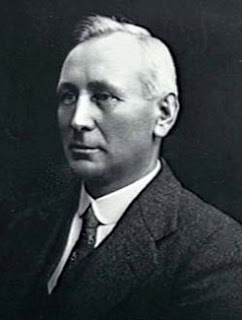

John Wren
Born in Collingwood in 1871, John Wren endured a rugged start in life. Son of a knockabout Irish labourer, Wren left school at 12 and took a number of menial jobs, ending in a manual position in a local lumber yard. A keen amateur sportsman, proficient at cricket and footy, Wren supplemented his modest wages by working as an independent bookie, taking bets on the local sporting comps that he followed avidly.

And so the story goes: in 1890 Wren bet his life savings on Carbine in the Melbourne Cup and, when the Kiwi horse got up, found himself with enough dough to go into business for himself. Wren opened a licensed betting agency on Johnston Street, near where he grew up, which quickly proved lucrative enough to expand into a chain of shopfronts.

As the money poured in, Wren's notoriety grew. 

He maintained links with Melbourne's criminal underground, running illegal totes alongside his legitimate ones, and employed a number of ex-cons in his businesses (Squizzy Taylor was rumoured to be a friend). He was also accused of fixing races and flouting Victoria's gambling laws, but each time charges were laid against him, he was able to beat the case. 

Wren also gave money generously to charities, and the Catholic Church, and fashioned himself as the champion of the underdog. His support for local sporting teams, Collingwood chief among them, and outspoken patriotism meant that he remained popular, as well as infamous.

John Wren had become a colourful, and quite exotic, local identity.


Deep Rock Swimming Club

Among Wren's many sporting interests was the Deep Rock Swimming Club. 

Nestled on a gentle bend in the Yarra, near Wren's house in Kew, Deep Rock was a popular swimming hole for inner city residents. After Wren assumed the Presidency of the club he expanded its activities; overseeing the construction of a concrete swimming pool for kids, instigating lifesaving lessons, and arranging carnivals and competitive swim meets.

After the outbreak of World War I, Wren decided to use the swimming club for a show of patriotic support. He conceived a swimming carnival, capped with a world record high dive into the Yarra from the cliffs opposite the club, with all proceeds going to the Returned Soldiers Fund.

This remarkable event was set for March 23, 1918.


The dive tower, March 23, 1918.
Alick Wickham had performed in Melbourne a number of times during his swimming career, so undoubtedly was well known to a sports fanatic like Wren. But, by 1918, his days as a national sporting champion were over. Perhaps this is what motivated him to accept the dangerous proposal Wren put forward; one final turn in the spotlight for an athlete who's prime was now past. Or maybe he was simply motivated by the thought of helping the war effort; Wickham's younger brother Ted had been killed on duty in France. 

Whatever the reason, Wickham agreed to a one-off high dive into the Yarra from an elevated platform. To add an extra element of spice, he also agreed to be billed as 'Prince Wikyama,' a visiting member of the Solomon Islands Royal family. The local press lapped up this exotic angle and this, along with the patriotic theme of the day. meant a big crowd was a certainty.

In the end, an estimated 60 000 people would cram into the surrounding park to watch the death defying feat, paying 6 shillings each and raising a considerable sum.


The first part of the carnival proceeded without incident; the swim meet was competitive, with the feature 100 yard race being won by a local swimmer ahead of Wickham (who had provided a sporting head start). The crowd built during the day, and by the time of the dive they were spread along both sides of the river, and even climbed trees to get a clearer view.

Around 5pm, Wickham was rowed across the river in a canoe, and then walked up a dirt track to the clifftop. He then mounted several flights of stairs, to the top of the wooden platform that had been erected there. The mood of the crowd was tense, nervous, solemn. As for the diver...


Wickham climbed back down the platform again. He spoke to officials. The crowd waited anxiously, a number now convinced that if he dived he would be killed, or seriously injured.

But after a few minutes he climbed up again, and took position on the edge of the diving platform. A bugler on loan from the local barracks played one long note, which silenced the crowd.


Wickham survived his jump, more or less unscathed, and was rewarded by a gesture of 100 pounds from Wren, who viewed the day as a great success. Wickham's feat was celebrated by the press across Australia, and the successful jumper found himself a minor celebrity again.

Wren also claimed that Wickham had broken a world record, in that the platform was 205 feet (62 metres) above the water. This almost immediately came in for considerable skepticism, as many eyewitnesses felt that the tower had been much lower than this.

But Wren was able to produce Sgt F. Smith of the Melbourne War Council, who had erected the platform for the event. Sgt Smith swore that the height of the tower was 205ft, 9inch, which seemed to set the matter firmly in the record.

Alick Wickham, Prince Wikyama, had set a new world's record.

The local press report the jump.
After the war, Wren's eventful life continued much as it had beforehand. 

His business interests were wide and varied enough that he survived a number of reversals, and he would remain a wealthy man for the rest of his life. As he grew older, he became steadily more involved in the Victorian Labor Party, and he was soon recognised as one of the state's most influential political operators.


Wren was the subject of Frank Hardy's classic local novel 'Power Without Glory,' (under the character name of John West), where he was depicted as a thoroughly amoral individual, corrupted by his thirst for power. Wren sued Hardy for libel but the court, almost certainly swayed by Wren's seedy reputation, dismissed the case.

A sports fanatic to the end, Wren suffered a heart attack while trying to get behind the goals in the final moments of Collingwood's grand final win of 1953. He died a few days later, on the 26th October 1953.

Alick Wickham's fate was more melancholy.

Too old for competitive swimming, Wickham's fortunes took a turn for the worse, and he was reduced to driving a cab in Sydney to make ends meet. In the 1920's he returned to the Soloman Islands to live, where he was married unhappily three times, and worked a variety of odd jobs. 


The cliff Wickham jumped from, present day.
Meanwhile, debate had continued about the height Wickham had jumped from on that remarkable day in 1918. 

To settle the argument, in 1965 the Yarra Bend Park Trust had the Yarra cliffs surveyed. This established their height as 106 feet and this, combined with an estimated tower height of about 30 feet, meant that Wickham's jump was more like 135 feet overall. Still considerable, and still an Australian record for that time, but not the world mark that had been claimed.

Record books that previously carried the story of Wickham's jump now swiftly removed it. 

Wickham himself passed away, penniless, of natural causes on August 10, 1967.


Deep Rock momnument, Yarra Bend park.

The Deep Rock Swimming Club continued to thrive after World War I, but fate seemed to conspire against it.

A flood in 1934 washed away the pedestrian bridge that provided easy access to the club grounds, and the clubhouse itself burned down the following year. And most of the remaining club members enlisted during World War II, many set never to return. New members never materialised, to take their place

By the 1950s the Deep Rock section of the river had gained a seedy reputation, as it was used as a discrete drinking and partying spot after hours. Finally, as pollution of the Yarra increased during the 20th century, people simply began finding alternate places to swim.

The club was finally abandoned at the end of the 1950s. A metal plaque, and stone memorial, are all that remain in the park today, small reminders of a fomer local institution, that once laid claim to an astonishing world record.


Saturday, July 11, 2015

Extreme Weather

With an extreme cold snap hitting Melbourne this weekend, it seemed like a good time to have a look back at the outer limits of weather in our city. Melbourne people talk a lot about the weather, and we are nationally famous for the varied, 'four seasons in one day' nature of the local climate.

This list is a guide to some of our local weather records, and extreme weather events from the past 150 years:


HIGHEST TEMPERATURE


7 February, 2009: A day that will live in local infamy. A perfect nightmare of conditions - record high temperatures, low humidity and gale force, hot winds - triggered the worst bushfires in Australian history; half a dozen major conflagrations that claimed 173 lives and destroyed several regional communities.

In the week leading up to 'Black Saturday,' Victoria was hit by unusually high, sustained temperatures. In Melbourne, the maximum temperature climbed above 43 degrees on three consecutive days for the first time since record keeping began, in 1859. As the fires gained momentum on Saturday, the mercury reached 46.4 degrees; not only the hottest temperature ever recorded in Melbourne, but the the highest recorded in any major Australian city.

Fires burned out of control for two weeks, before being contained. The extreme weather, part of a longer heat wave, continued until the first week of March, when cooler conditions helped fire services finally extinguish the last of the blazes.


COLDEST TEMPERATURE

According to the Bureau of Meteorology, the coldest temperature recorded in Melbourne is - 2.8 degrees, registered on 21 July 1869.


SNOW IN MELBOURNE


This ranks as one of the great unanswered questions of Melbourne; does it ever snow in the city?

The answer, amazingly, is yes (but only very occasionally). While Mount Dandenong, and some of the other outer suburbs, gets a dusting every decade or so, the last snowfall in the CBD was in August 1951:


In Burwood, then schoolgirl Susan Webster (picture top) recalls the event:


There are also records of snow falling in the city in 1899.


HIGHEST WIND SPEED in CBD

The highest wind speed recorded in Melbourne was 121 km/hour, on 3 September 1982, at the anemometer in Olympic Park.


THE BRIGHTON TORNADO

On 2 February 1918, a hot, windy day produced an intense storm cell off the coast of Brighton, in Melbourne's south east. The storm was powerful enough to produce two tornadoes, which crossed the coast around 5.45pm. The effects were dramatic:


The last photo shows the Methodist church on Hawthorn Road, which had to be completely rebuilt Several dozen homes were also damaged, the roof torn off a local hotel, and the Sandringham rail line closed. A  number of people sustained minor injuries, and damages of 150 000 pounds incurred.

It is estimated that the windspeed of the tornadoes was between 250 and 320 km per hour, making this Melbourne's most violent storm.


HEAVIEST RAINFALL


The heaviest rainfall Melbourne has seen was recorded during a dramatic thunderstorm on February 3, 2005. 120mm fell in the 24 hours to 9am on February 4; a fifth of the city's average annual rainfall.

The storm was caused by a massive low pressure system off Victoria's south coast, so large that it extended right out into the Tasman Sea. Heavy rain continued throughout the following week, setting several more records for precipitation (highest 48 hour total, highest weekly total), and flooding was widespread.


THE GREAT FLOOD

The Yarra is a river prone to flooding. While this still occurs today during periods of heavy rain, a lot of planning and engineering effort has gone into minimising the effects in the inner city.

But this was not always the case.


On 13 July 1891, several days of sustained heavy rain caused the river to burst its banks in spectacular fashion, inundating the surrounding suburbs. The river would eventually swell to more than 300 metres in width:


Thousands of people were displaced by the flood, which took several days to subside.